The Shape and Proportion of Newborn Babies Are Simply Not Conducive to Easy
On Track - Section 3 in PDF
The Whole Child (0 - 6 years)
• Growth • Nutrition • Feeding Skills • Dental Health • Sleep Early child development usually follows a sequence, as the child needs to master one skill before he can acquire the next, but all children develop at their own rate. At times, a child may take a long time to master a new skill; at other times, he may seem to skip a skill in the expected sequence in his speed of development. Through careful observation, assessment and communication with the child's caregivers, professionals can draw a clear picture of the child within their setting. Identifying risks, concerns or delays requires interpretation within the entire context of the child. Children develop as a whole, but development is often grouped into domains. In this resource, developmental skills and development have been grouped into five domains to help professionals understand the specific indicators within each area. This section contains some key information about the following developmental areas: Professionals need to keep all of these considerations in mind as they use and reference this resource. If one or more significant delays in a developmental domain are noted, professionals should encourage families to seek a referral from a physician, other expert or specialized children's services (See Section 7 Local Contacts and Services). Two other key resources are:
• Perceptual (Sensory) • Character • Aesthetics (Artistry)
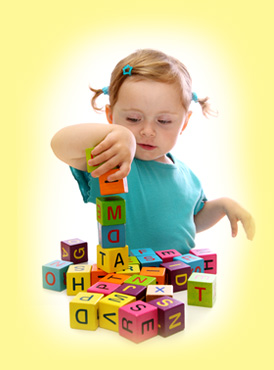 The changes that occur in a child's development in the first few years of life are truly remarkable. Caregivers and professionals note children's development as they begin to smile, laugh, sit, crawl, babble and talk. Children begin to socialize and play cooperatively with other children. They acquire important skills to get along with others such as turn-taking, sharing and following instructions, as well as skills that will help them academically such as drawing, counting, reading, and writing.
Early intervention is also highlighted in the enhanced 18 months strategy. This strategy emphasizes the need to assess each child's development and developmental health at the 18 months visit with his primary care provider. For more information visit: www.18monthvisit.ca. 
Children develop on a continuum that is influenced by different factors. For example, differences in children's physical development have been noted based on gender, geography, and early experiences (Berk, 2008). Cultural practices can also influence the development of language, character, self-concept, and drawing (Berk, 2008). Understanding the continuum of development will assist professionals in promoting each child's development and identify delays.
All developmental items listed within the age and domain categories in this resource should be viewed within each child's continuum. Although most children will have achieved the skills listed for each age section, there are sometimes good reasons why a child will not have achieved that skill. For example, some First Nations practice a "Walking Out Ceremony". This means that the infant's feet up to one year of age do not touch the ground. A practice like this may temporarily affect the infants crawling and walking development and should be noted when observing the child's development.
- The Early Learning for Every Child Today document that provides a continuum of development with examples on how the child's increasing skills can be assessed.
- The Nipissing District Development Screen is a set of 13 developmental checklists that can be completed by parents or caregivers at key developmental ages for all children from birth to 6 years. It is not a diagnostic tool, but is designed to assist parents, health care and child care professionals to record the developmental progress of infants and children. The checklists are free for users in Ontario and can be ordered from the website at http://ndds.ca/ontario/home.html.
Similar to these resources, the On Track guide provides a reference tool to assist professionals in their observation of the development of all children. Growth One of the most used indicators of healthy development is physical growth. Infants grow at an astounding rate. By the age of two, a child will have more than tripled his birth weight and have reached about half of his adult height. His bones, that were somewhat flexible at birth, harden and become better able to support his weight. The bones of his skull also harden and fuse. The soft spots on his head disappear by 18 months. Infants grow quickly and put some of their weight gain into body fat, giving them the characteristic infant look. As they continue to grow and increase their motor skills, fat is gradually replaced by muscle. This contributes to their change in body proportions (Oswalt, 2007). During the first four months, infants grow about 20 - 30 grams (2/3 - 1 oz) per day for a total of 3.6 kg (8 lbs) in boys and 3.15 kg (7 lbs) in girls. After this time, weight gain begins to slow somewhat. Height Height also increases rapidly. During the first four months infants grow about 14 cm (6 inches). The increase in height also begins to slow somewhat thereafter. By the age of two, children have reached about half of their adult height. At birth, most of the infant's body mass is in his head, but over the next two years his body growth catches up giving him more adult-like proportions. His head also continues to grow and is measured by head circumference. These three parameters are plotted on a growth chart. Although ups and downs are common in the first 18 months, by age 2 a child usually follows a curve on the growth chart. Boys and girls have different patterns in growth. Because of this, there are different growth charts for both sexes. For example, if a boy follows the 50th percentile in height, it means that 50% of boys at the same age will be taller and 50% will be shorter than him. If a girl follows the 60th percentile in weight, it means 40% of girls at the same age will be heavier and 60 % will be lighter. The most up-to-date growth standards were developed with a large, multi-population cohort of children from six different countries and four different continents and are based on breastfeeding infants by the World Health Organization (WHO). The WHO charts have been adopted by the Canadian Pediatric Society (CPS) and can be downloaded from www.cps.ca/english/publications/cps10-01.htm 
The exact location on a measurement graph is less important than the trend over time.
Weight
Head Circumference
Growth Charts 
Nutrition
- The first three years of a child's life are the most crucial for a child's development, as the child grows rapidly than during this period (WHO, 2003). Healthy eating not only supports growth, it is fundamental to brain development and has been linked to learning and school readiness. The effects of poor nutrition early in life can lead to a variety of challenges in children, such as:
Another significant concern is the growing problem of childhood obesity. In 2004, it was reported that 26% of Canadian children and youth aged 2 to 17 were either overweight or obese. Obesity has been linked to a number of illnesses such as diabetes, stroke, heart disease, hypertension, and certain cancers (Leitch, 2007).
www.beststart.org/resources/nutrition/index.html
www.caringforkids.cps.ca/healthybodies/index.htm
www.eatrightontario.ca/en/default.aspx
www.hc-sc.gc.ca/fn-an/food-guide-aliment/order-commander/index-eng.php#1
www.hc-sc.gc.ca/fn-an/pubs/infant-nourrisson/nut_infant_nourrisson_term-eng.php
www.nutritionrc.ca/
- Pediatric Nutrition Guidelines for Primary Health Care Providers
Key Recommendations
- Infant is breastfed exclusively for 6 months and continues to breastfeed for up to 2 years and beyond
- Exclusively breastfed infant receives a Vitamin D supplement daily up to one year
- Formula is prepared and stored following preparation and storage guidelines
- Expressed breastmilk is stored following storage guidelines
- Expressed breastmilk or formula is not heated in microwave ovens
- Solids or sweetened substances are not added to the infant's bottle (e.g. cereal or corn syrup)
- Water or other fluids are not given to the infant before 6 months
- Complementary foods are introduced when the infant reaches 6 months of age, with particular attention to iron-rich foods (e.g., iron-fortified cereal, meat, fish, cooked egg yolk, well-cooked legumes, or tofu)
- A variety of age appropriate foods are offered to the infant from 6 months of age
- The infant is given iron-rich foods (e.g., iron-fortified cereal, meat, fish, cooked egg yoke, well-cooked legumes or tofu) after solids are introduced
- High mercury fish is avoided or offered rarely
- Cow's milk (3.25% M.F.) is not given to the infant before 9-12 months of age
- Fortified soy beverage is not given before 24 months of age
- Other vegetarian based beverages (e.g., rice) are not given as a substitute for cow's milk
- The infant drinks no more than 4 oz of fruit juice per day until the age of 18 months and no more than 6 oz from 18 months to 6 years
- Sweetened, carbonated or caffeinated drinks are not given to the infant
- The child drinks between 16 oz to 24 oz of milk per day once he is no longer breastfeeding
- The child drinks whole cow's milk (3.25% M.F.) until the age of 2 years, then reduced-fat cow's milk
(e.g., 1% or 2% M.F.) - The child has access to water between meals and snacks to quench thirst as needed
- The child is consistently offered foods from all food groups daily
- The child is allowed to decide how much food to eat (e.g., no force feeding)
- The child has a feeding schedule that includes 3 meals and 2 - 3 healthy snacks daily, leaving 2 - 3 hours between meal and snack times
- The child's food intake rarely includes trans fats and additional saturated fats are limited
- Meals and snacks are offered at a table without distractions (e.g., TV)
- Family mealtimes are a regular occurrence for the child
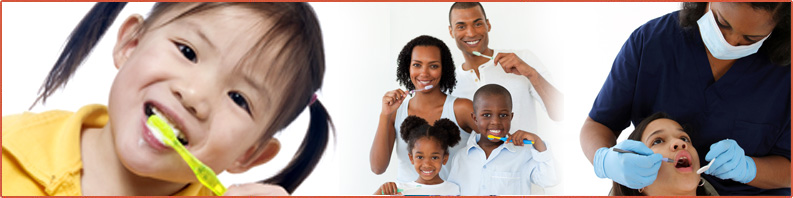
Feeding Skills Dental Health 20 deciduous (primary or non-permanent) teeth appear by the time the child is two to three years old. Dental development in children can be delayed by up to a year. The age of appearance of the teeth is not as important as the sequence. Permanent teeth begin to develop around birth (Alsada et al., 2005), but the first permanent tooth will only erupt at approximately 6 years of age (Meadow & Newell, 2002). The deciduous teeth tend to be small and short, with a milky white colour, while permanent teeth are wide, with a white to grey colour (Brown, 2007). Some variations have also been noted by sex (e.g., teeth usually erupt a few months earlier in girls) (Meadow & Newell, 2002). The following table provides an overview of the approximate appearance of primary or deciduous teeth in children. A major concern among dental professionals continues to be the number of young children with Early Childhood Tooth Decay (ECTD) also known as Early Childhood Caries (ECC), a preventable public health concern. Dental bacteria are often transmitted by the caregiver to the child through practices such as sharing utensils or cleaning a dropped pacifier with a caregiver's saliva (American Academy of Pediatric Dentistry, (AAPD) 2004). Dental bacteria are often transmitted by the caregiver to the child. Caregivers can transmit bacteria through playing, kissing, and practices such as sharing utensils or cleaning a dropped pacifier with a caregiver's saliva. The parent or caregiver must have good oral health for the child to have good oral health. A good resource is the online video: Baby Oral Health: Pregnancy through Childhood at www.utoronto.ca/dentistry/newsresources/kids/index.html. For more information check the Ontario Association for Public Health Dentistry at www.oaphd.on.ca Infants at birth have a very different sleep pattern than adults. Half of the infants sleep is spent in REM or active sleep. REM sleep is recognized by faster and irregular breathing, frequent body movements, noises such as grunting or cries, and rapid eye movements (Anders, 2003). During this time the infant puts his experiences into memory. REM sleep is therefore a very important part of learning. Infants also spend fifty percent of sleep in non-REM or quiet sleep. This type of sleep is characterized by deeper sleep where breathing is slow and regular, the body is quiet and the infant cannot be disturbed easily. In infants the sleep cycle is only about 50 - 60 minutes long. This means he will spend about 25 - 30 minutes in REM sleep followed by the same amount of quiet sleep. After that he will wake, moving from drowsy to quiet alert to active alert. It is not until the infant is about four to six months of age that he has learned enough self-soothing behaviours to consolidate sleep during the night hours. By three years of age, REM sleep has been reduced to 30% with 70% of sleep spent in quiet sleep. Sleep cycles also lengthen gradually. By adolescence, children will have reached adult levels of 20% REM and 80% quiet sleep in 90-minute sleep cycles. The amount of sleep varies greatly from one child to the other. Infants up to six months of age may spend up to 16 hours per day sleeping (CPS, 2007), but as little as 10 hours has been reported in some infants. Infants from six to 12 months may sleep up to 14 hours per day, Toddlers about 10 - 13 hours and preschoolers 10 - 12 hours (CPS, 2007). Perceptual (Sensory) Touch Touch after birth and even before birth enhances early physical growth and is vital to solid emotional development. Touch provides security and comfort as well as exploration. Exploration through touch initially occurs though skin and mouth and later through hands and fingers (Berk, 2008). Taste and Smell From birth,infants can show that they like and dislike a number of smells. Amniotic fluid and later breastmilk have changes in taste and smell depending on a mother's diet, providing her child with a range of early experiences that stimulate these senses and influence his preferences (Berk, 2008). Hearing Hearing is fully developed at birth and a congenital hearing loss can be identified in newborns. Hearing loss in young children can have a profound and lasting effect on their future outcomes in life. Depending on the severity, hearing loss in children has been related to delayed psychological, social/emotional, cognitive, academic, language, and speech development (Puig et al., 2005; Thompson et al., 2001; Wada et al., 2004). Early identification and intervention strategies are key to positive later outcomes. Vision An infant's vision is the least developed of all senses at birth. The development of the eyes is completed by about 6 months of age, and coordination between the eyes is achieved by about 12 months of age (Pantell et al., 2009). At that point, the infant's vision has reached adult levels (Rudolph et al., 2003). A child's visual ability presents many opportunities for learning and overall development, especially in the critical first few years of life. Vision has been regarded as the "most important sense" (Rudolph et al., 2003, p 492), as it impacts early learning through "imitation, primarily visual imitation. … communication, bonding, motor development, spatial concepts, balance, object permanence, language development and social interaction" (Rudolph et al., 2003 p 492). In fact, 80% of a child's learning involves vision. Poor vision is therefore linked to adverse effects on a child's educational achievement and later career choices (CPS, 2009). Due to the importance of vision in a child's development, early detection and intervention of vision problems are essential. If detected early enough, many vision problems can be treated, with favourable outcomes in children (Carreiro, 2003; CPS, 2009; Rudolph et al., 2003). Vision screening in Ontario is free for children up to the age of 19 and should occur at six months, three years and yearly thereafter. It can be done by an optometrist or the child's primary physician. Ontario's Blind – Low Vision Early Intervention Program is designed to give children who are born blind or with low vision the best possible start in life. Specialized family-centred services are funded by the province and are available for children from birth to Grade 1. For more information check the Ministry for Children and Youth Services website at: www.children.gov.on.ca/htdocs/English/topics/earlychildhood/blindnesslowvision/index.aspx. Many factors can contribute to vision loss, such as malnutrition, poor hygiene or vitamin deficiencies (Oyiborhoro, 2005). These are rare in Canada and more likely to occur in developing countries. Character development includes the development of:
Note. Child feeding practices may vary depending on cultural practices <link> (e.g., hand-feeding child until school age, utensil use, adding culture-specific supplements to diet). Professionals should explore and support cultural practices unless the child's health will be directly harmed as a result of a specific practice.
(Brown, 2007; Meadow & Newell, 2002) Deciduous (non-permanent or baby) teeth Appearance (in months) Central incisors – lower 6 – 10 Central incisors – upper 7 – 12 Lateral incisors – upper 8 – 12 Lateral incisors – lower 7 – 16 Canines 16 – 23 First molars 12 – 19 Second molars 20 – 33
An initial indicator of Early Childhood Tooth Decay is a white lesion in the tooth enamel (Nurko et al., 2003), which may lead to a brown discolouration that indicates the presence of a dental cavity (Yarnell, 2007).
In Ontario, dental hygiene and dental visits are not covered under OHIP, but children without dental coverage can receive treatment through the Children in Need of Treatment (CINOT) program www.mhp.gov.on.ca/english/health_promotion/cinot.asp.
The following factors promote good oral and dental health:
Connection: Healthy Pregnancy - Healthy Teeth
(Kulkarni, 2003)
The following factors build the foundation for good dental health and development:
Practicing Good Oral Hygiene
(AAP, 2003, 2008; AAPD, 2004; AAPD/AAP, 2008; Alsada et al., 2005; Boggess & Edelstein, 2006; Dini et al., 2000; Kulkarni, 2003; Nainar & Mohummed, 2004; OAPHD, 2003)
Sleep
It takes time for infants to develop a sleep-wake system and develop a circadian rhythm. It can take much longer in some infants than others. Factors such as time cues, biological factors, environmental factors like the home environment and infant temperament all play a part (Centre of Excellence for Early Childhood Development (CEECD), 2008).
More tips on how to establish healthy sleep for older babies, toddlers and preschoolers can be found at: www.caringforkids.cps.ca/healthybodies/HealthySleep.htm and
http://www.child-encyclopedia.com/en-ca/child-sleeping-behaviour/how-important-is-it.html.
By the time the child is born some of his senses are already well or fully developed and help him connect to his caregivers and make sense of his experiences. Perceptual development is linked and inter-related to the five domains. For example, hearing is closely related to language development, vision to cognitive development and touch to emotional development. Perceptual milestones are mostly listed in Infant's Development by Age. Vision and Hearing Milestones are also listed in the Toddler's Development by Age. After that they are included in the five domains of development.
Note: Berk (2008) highlights the fact that little research evidence is available in the areas of touch, taste, and smell beyond birth.
In Ontario, the Infant Hearing Program (IHP) with universal screening of newborns, began in 2002 (Canadian Working Group on Childhood Hearing, 2005) and is now well established. All hospitals in Ontario are screening infants after birth and follow up services are available in each community. You can find more about the Infant Hearing Program in Ontario on the Ministry for Children and Youth website at: www.children.gov.on.ca/htdocs/English/topics/earlychildhood/hearing/index.aspx.
(Joint Committee on Infant Hearing, 2007; Puig, Municio, & Medà, 2005)
Often children with vision problems show no symptoms. In fact they may be misdiagnosed with an attention or learning difficulty. Although not exhaustive, some of these signs may indicate a concern:
(e.g., drug use, infection, medications, Fetal Alcohol Spectrum Disorder, prematurity)
(Carreiro, 2003; Olver & Cassidy, 2005; Oyiborhoro, 2005; Rudolph et al., 2003)
Character
(Ciner 1997, Tamplin, 1995 as cited in Rudolph et al., 2003; Olver & Cassidy, 2005; Pantell et al., 2009; Shelov & Hanneman, 1997)
- Moral understanding and ethical behaviour including a sense of justice and fairness, right and wrong and the consequences that follow
- Empathy and pro-social behaviour including being able to understand another's emotions and feel what they are feeling, use actions to help or comfort focusing on the other person and not on self
Social, emotional and cognitive functions are strongly involved in a child's character development. Moral Understanding and Ethical Behaviour Although adults initially are the largest influence on child's moral understanding and ethical behaviour, over time, children develop a personal set of internal standards (Berk, 2008). By the end of the early childhood stage, children have internalized many moral rules and behaviours (Berk, 2008) and can tell the difference between moral imperatives, social conventions and matters of personal choice.
- From two to five years of age, expect the child to:
- Model ethical behaviours (e.g., does not damage another child's property)
- Respond to breaking of rules with empathy-based guilt (e.g., understands that his action hurt the other's feelings or caused physical damage)
- Focus on observable features and consequences when making moral judgments (e.g., physical damage, punishment, an adult's status)
- By 6 years of age expect the child to:
- Understand differences in authority figures' legitimacy
- Know the difference between moral imperatives, social conventions, and matters of personal choice
- Delay gratification
(e.g., wait for an appropriate time and place to engage in a self-serving or tempting act) - Have a strong sense of justice and fairness based on equality
(Berk & Roberts, 2009)
Levels of Reasoning about Positive Justice
Children's views about positive justice (or how they believe goods should be distributed fairly) also change with age. Over time, children believe that equality should form the basis for sharing with others. Damon (1980 as cited in Cole & Cole, 1993) has outlined levels of reasoning for children up to 10 years of age and beyond. Here are the descriptions of his levels of reasoning about positive justice in children up to age 7:
- Level 0-A (Age 4 and under)
- Positive-justice choices come from wishing that something should happen. Reasons simply assert the wishes rather than attempting to justify them ("I should get it because I want to have it").
- Level 0-B (Ages 4 to 5)
- Choices still reflect desires but the child now justifies them on the basis of external, observable realities such as size, sex, or other physical characteristics of persons (e.g., we should get the most because we are girls). Such justifications, however, are invoked in a changing, after-the-fact manner, and are self-serving in the end.
- Level 1-A (Ages 5 to 7)
- Positive-justice choices come from notions of strict equality in actions (e.g., that everyone should get the same). Children now see equality as preventing complaining, fighting, or other types of conflict.
Empathy
Empathy is the ability to understand another's emotions and feel what they are feeling. This begins to emerge as early as 18 months of age (Berk, 2008). With the increase in a child's vocabulary, he is able to express his feelings and emotions with greater precision. Expressing one's own feelings does not automatically lead to empathy. Children must learn to understand what others are feeling by reading cues from the other person and putting themselves in the other's place. Empathy serves as a motivator for pro-social behaviour, actions that benefit another person without any expected reward for the self (Eisenberg, Fabes and Spinrad, 2006 as cited in Berk, 2008). One unique program, Roots of Empathy, is designed for children from Kindergarten to Grade 8. Throughout the year, a baby and his or parent(s) visit the classroom. The children interact with the baby and discuss the baby's development and feelings. In turn, children's empathy and social/emotional skills are enhanced. Children who participated in Roots of Empathy also showed lower levels of aggression. Seeds of Empathy, an off-shoot of Roots of Empathy, brings the program to children from 3 to 5 years of age. For more information about the programs, visit: Roots of Empathy –
Seeds of Empathy – www.seedsofempathy.org Ways to Promote Character Development in the Early Years
The following suggestions are ways to enhance children's character development in an early childhood environment:
- Build a sense of community so that children learn together in an atmosphere of respect and security.
- Provide opportunities for children to have a voice in creating the rules and the consequences for not following them.
- Give reasons for consequences, stressing where possible the effect of the child's actions on the group.
- Provide opportunities for children to collaborate with peers.
- In stories and discussions of everyday experiences, help the children to consider the feelings of other persons, real or fictional.
- Use role-play from events in daily life that lead to disappointments, tensions, fights, and joys in order to provide opportunities for the students to see things from perspectives other than their own.
- Discuss concepts of fairness and unfairness.
- Use stories, literature, history, current events and/or films. Stimulate discussions that will provoke higher-stage reasoning.
- Be a role model and point out other role models within the family and community.
(Adapted from Duska & Whelan, 1975; Higgins, 1995, as cited in Berns, 2004) - Promote the introduction of the Seeds of Empathy or Roots of Empathy program in your early childhood education and care setting.
As children gain greater control over their fine motor skills and their cognitive abilities you may note progress in their creative expression through drawing. A number of factors can influence a child's art development, such as: Stages of Art Development (Berk, 2008; Eden, 1983, Gaitskell, 1958, Kellogg, 1969, Lasky & Mukerji, 1980, as cited in Vaclavik, Wolanski, & Wannamaker, 2001; Lowenfeld & Brittain, 1987)
Aesthetic (Artistry)
Although the ages at which children pass through the various stages of art development may vary, children typically pass through these stages in the same sequence.
- The scribble stage (about 18 months to three years) is characterized by:
- Dots
- Lines
- Zigzags
- Whorls
- The symbolic or pre-schematic stage (about three to six 6 years) is characterized by:
- Shapes (e.g., circles, triangles, squares) and crosses
- Radials
- Mandalas
- Suns
- Large heads
- Simple humans (hairpin, tadpole shapes)
- The representational or schematic stage (about six to nine years) is characterized by:
- Common features are present in the child's art – animals, trees, flowers, houses, cars, etc.
Art such as visual arts, music and drama have been shown to play an important part in children's development. El Sistema, a music program for children from two to 18 years of age in Venezuela, is one such example. The program has been adapted in over 20 other countries including Canada, because of its positive results on children (McCarthy, Hurst, & McCarthy, 2009). It shows us that arts are an important part of learning by engaging all domains and can be a key to elevating a child's trajectory.
lewellyngrese1937.blogspot.com
Source: https://www.beststart.org/OnTrack_English/3-childrensdevelopment.html
0 Response to "The Shape and Proportion of Newborn Babies Are Simply Not Conducive to Easy"
Post a Comment